Machines don’t warn you twice. One overlooked energy source can turn routine maintenance into a life-altering incident. Across manufacturing plants, utility facilities, and industrial sites, the typical lockout tagout (LOTO) procedure is the frontline defense against unexpected energization, startup, or release of stored energy. Despite widespread awareness, improper execution remains a leading cause of workplace injuries. This article breaks down the real-world application of a standard LOTO procedure—what it is, how it works, and where it often fails.
What Is a Typical Lockout Tagout Procedure?
Lockout tagout is a formal safety process used to isolate all hazardous energy sources from machinery or equipment before maintenance, repair, or servicing. The “lockout” portion involves placing a physical lock on energy-isolating devices, rendering them inoperable. “Tagout” means attaching a warning tag that identifies the worker, reason for the lockout, and time of application.
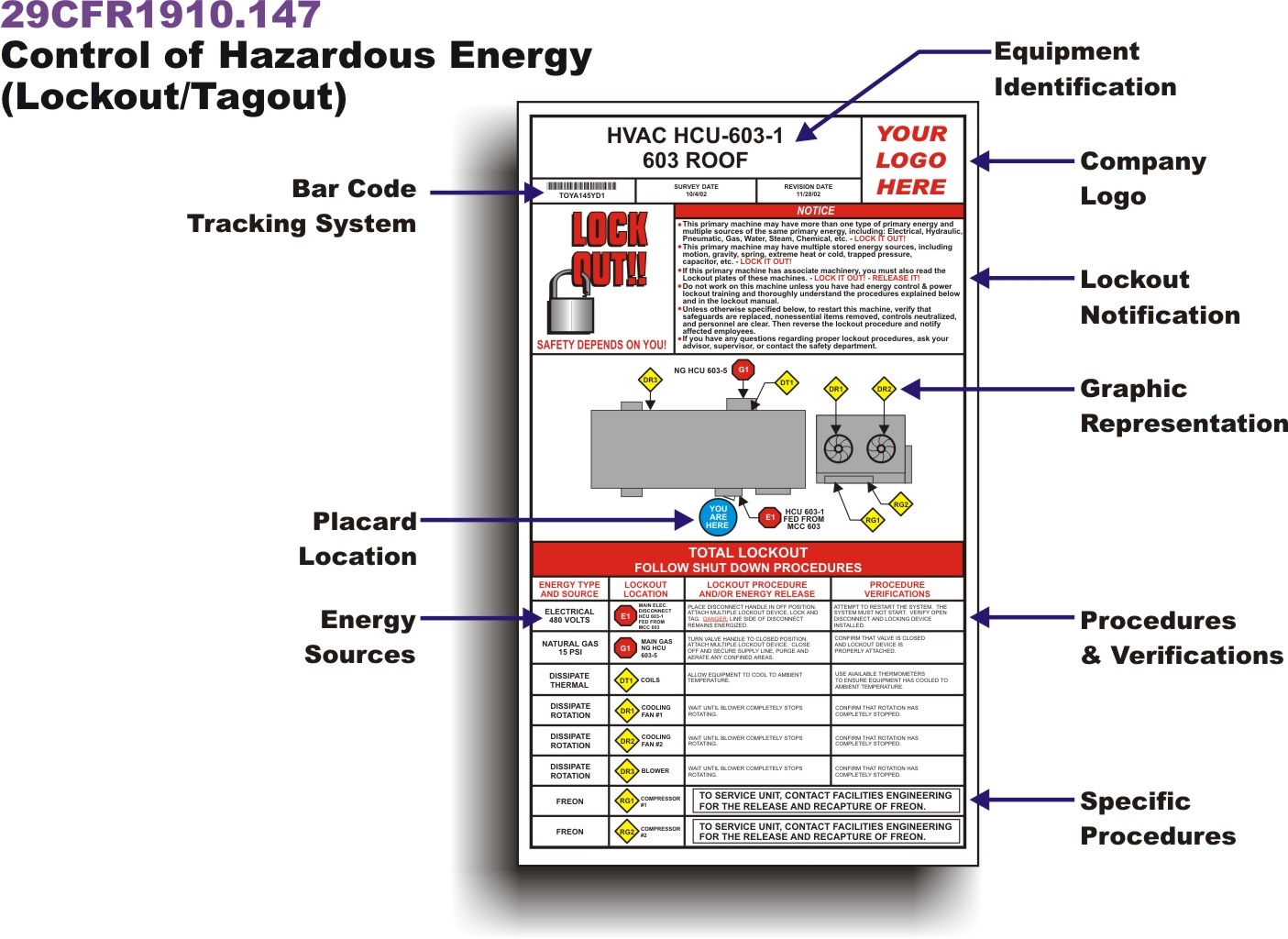
This procedure isn’t optional. It's mandated by OSHA under 29 CFR 1910.147, applying to any mechanical, electrical, hydraulic, pneumatic, chemical, thermal, or gravitational energy source. The goal? Zero risk during servicing.
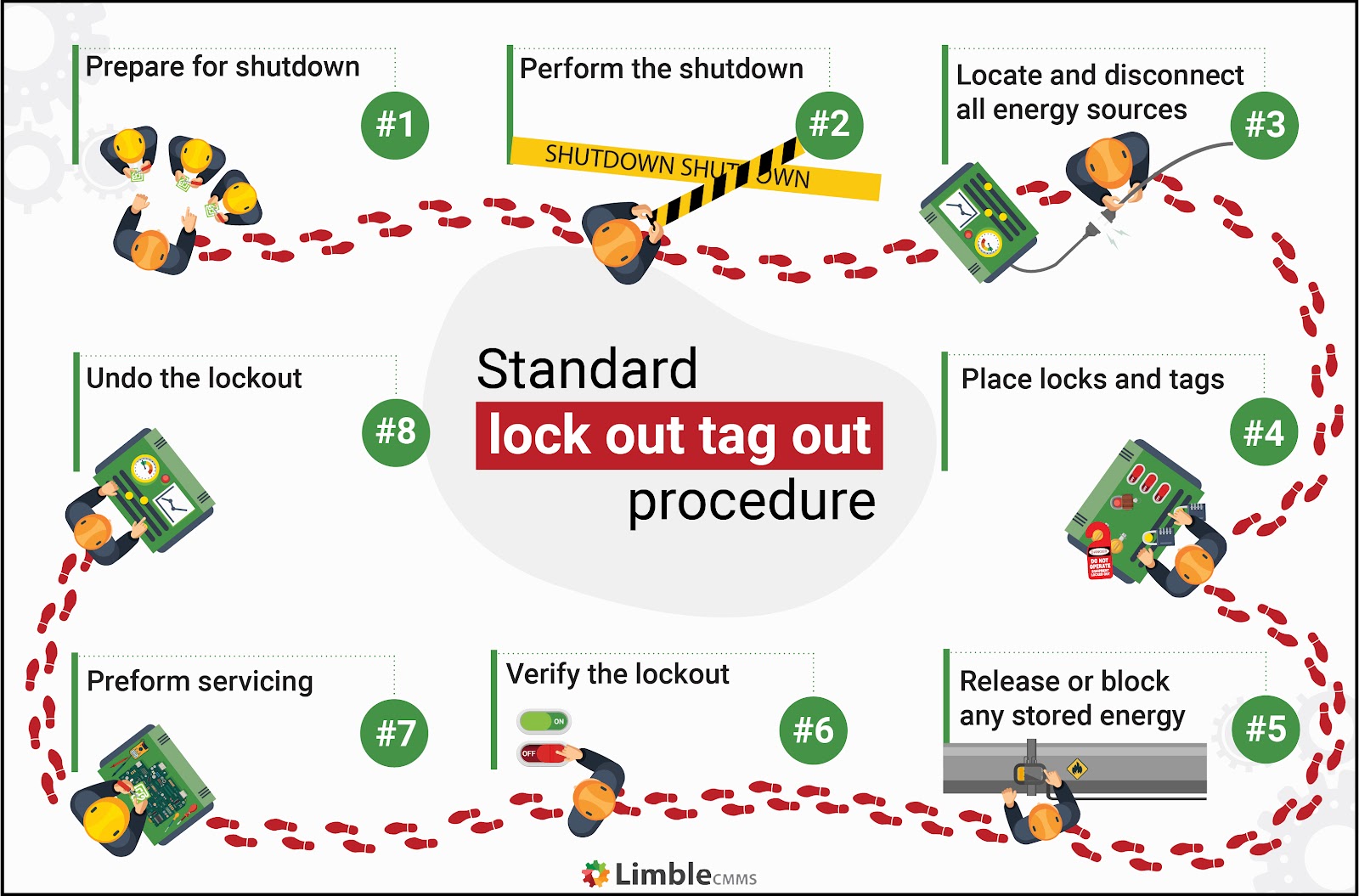
A typical LOTO procedure follows a standardized sequence designed to eliminate guesswork and enforce accountability at every stage.
The 7-Step LOTO Procedure: Standard Practice in the Field
While adaptations exist based on equipment complexity, the core steps of a typical lockout tagout procedure remain consistent. Deviations—even minor ones—can compromise safety. Here's the sequence followed in high-compliance environments:
1. Preparation: Identify Energy Sources and Methods
Before touching any machine, authorized employees must review the equipment-specific LOTO procedure. This includes:
- Listing all energy types involved (electrical, hydraulic, etc.)
- Identifying isolation points (circuit breakers, valves, disconnects)
- Selecting appropriate lockout devices (hasps, valve locks, circuit lockouts)
Common Mistake: Assuming all energy is visible. Compressed air in lines or tension in springs can linger long after power is cut.
2. Notify Affected Personnel
Communication is non-negotiable. Operators, supervisors, and nearby staff must be informed that maintenance is beginning and equipment will be taken offline. This prevents someone from unknowingly restoring power.
Real Example: In a Midwest food processing plant, a worker restarted a conveyor after seeing it idle—unaware maintenance was inside. The resulting injury triggered a $158,000 OSHA fine.
3. Shut Down the Equipment Properly
Use normal operating controls to stop the machine. Don’t rely on emergency stops for LOTO initiation—these don’t isolate energy sources.
Follow shutdown SOPs. Improper shutdown can leave residual energy or create unsafe conditions during isolation.
4. Isolate All Energy Sources
This is where protection begins. Shut off and disconnect every energy supply:
- Flip electrical breakers to OFF and remove fuses
- Close and block fluid lines with manual valves
- Depressurize pneumatic or hydraulic systems
- Block moving parts held by gravity
Tip: Use lockout-compatible isolation devices. Universal electrical lockouts, ball valve covers, and plug lockouts ensure energy controls can’t be bypassed.
5. Apply Locks and Tags
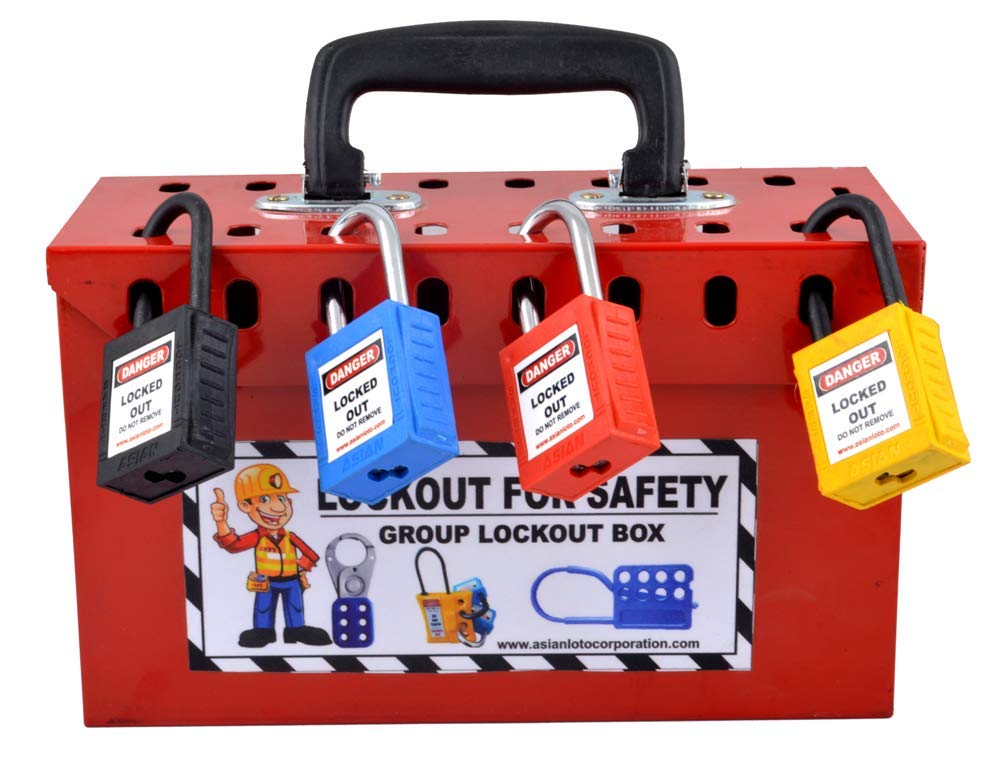
Each authorized employee applies their personal lock and tag to every isolation point. This is critical: one person, one lock, one key. Group lockout boxes are used when multiple workers are involved.
Tags must include: - Employee name - Department - Date and time of lock application - Reason for lockout
Shared locks or “master keys” violate LOTO principles. If a worker can’t retrieve their own lock, the procedure fails.
6. Release Stored or Residual Energy
Even after isolation, energy can remain trapped:
- Capacitors holding electrical charges
- Elevated machine parts under tension
- Pressurized lines
- Hot surfaces
Steps to neutralize: - Bleed air or fluid lines - Ground conductors - Allow cooling periods - Mechanically block parts that could move
Failure Point: Skipping verification. Always test for zero energy—don’t assume.
7. Verify Isolation (Also Called “Zero Energy State” Check)
This is the final, non-negotiable step.
Attempt to start the machine using normal controls. If it starts, the LOTO failed. If nothing happens, it’s safe to proceed.
Then: - Return starter to OFF - Confirm all controls are inactive - Begin servicing
Verification isn’t a formality—it’s the linchpin of safety.
Common LOTO Procedure Failures (And How to Avoid Them)
Even experienced teams make mistakes. These are the most frequent breakdowns in typical lockout tagout procedures:
| Failure | Risk | Prevention |
|---|---|---|
| Skipping group lockout protocols | One worker’s lock removed prematurely | Use group lockout hasps and a control box |
| Incomplete energy source identification | Residual energy causes startup | Conduct pre-job energy audits |
| Using tags without locks | Tags can be ignored or removed | Lockout must be physical; tagout is supplemental |
| Poor tag clarity | Miscommunication during shift change | Standardize tag fields and language |
| Failure to verify zero energy | False assumption of safety | Always perform operational check |
One Midwest refinery reported a 70% drop in maintenance incidents after introducing mandatory verification logs—written confirmation that each step was completed and witnessed.
Equipment-Specific LOTO Requirements
Not all machines follow the same isolation logic. A typical LOTO procedure must be customized. Examples:
Conveyor Systems
- Multiple isolation points (drive motors, transfer points)
- Risk of gravity rollback
- Requires mechanical blocking (ratchet straps, chocks)
Hydraulic Presses
- High-pressure fluid storage
- Must bleed lines slowly
- Lock relief valves and power units
Boilers and Steam Systems
- Thermal energy lingers
- Requires cooldown period
- Isolate fuel, water, and steam lines
Robotic Workcells
- Often tied to master control panels
- May require network-level disable
- Backup batteries can power movement
Generic LOTO forms won’t cut it. OSHA requires documented, machine-specific procedures.
Roles in a LOTO Procedure: Who Does What?
Clear responsibilities prevent confusion.
Authorized Employee: The only person allowed to perform LOTO. Trained in energy control, isolation methods, and emergency response. Applies their own lock and tag.
Affected Employee: Operates or uses the equipment but doesn’t perform maintenance. Must understand LOTO’s purpose and never remove a lock or override a tag.
Supervisor: Oversees the process, ensures compliance, verifies procedure updates, and manages shift changes during extended lockouts.
Mixing these roles leads to breakdowns. A 2022 incident in Pennsylvania occurred when an operator—untrained in LOTO—tried to “help” by removing a lock. The machine cycled, causing a crush injury.
Tools and Devices Used in a Typical LOTO Procedure
Effective lockout requires the right hardware. Here are five essential LOTO tools used industry-wide:
| Tool | Purpose | Best Use Case |
|---|---|---|
| Personal Lockout Locks | Individual control of isolation points | Electrical panels, valve stems |
| Lockout Hasps | Allow multiple locks on one point | Group maintenance tasks |
| Circuit Breaker Lockouts | Prevent breaker re-engagement | Electrical control panels |
| Ball Valve Lockouts | Block quarter-turn valves | Hydraulic/pneumatic lines |
| Group Lockout Station | Centralized control for teams | Multi-worker repairs |
Supplemental items include danger tags, breaker finders, lockout kits, and lockout logbooks. Digital LOTO systems are emerging but must still comply with physical isolation requirements.
Training and Compliance: The Hidden Layers of LOTO Success
A procedure is only as strong as the people who execute it. OSHA requires:
- Initial training for all authorized and affected employees
- Retraining every 12 months
- Additional training after procedure changes or incidents
But compliance isn’t just about checklists. Effective training includes:
- Hands-on practice with real equipment
- Simulated energy release scenarios
- Role-playing communication breakdowns
- Audits with surprise LOTO drills
One automotive plant reduced LOTO violations by 90% after switching from classroom lectures to immersive floor training—where workers practiced isolation on decommissioned assembly units.
Conclusion: Make LOTO a Culture, Not a Chore
A typical lockout tagout procedure isn’t just a regulatory hurdle—it’s a lifesaving protocol. When followed precisely, it prevents amputations, electrocutions, and fatalities. But its strength lies in consistency, clarity, and accountability.
Implement machine-specific procedures. Train rigorously. Audit regularly. And never let urgency override safety.
Start tomorrow by reviewing one LOTO procedure on your floor. Walk through it step by step. Verify every device. Challenge assumptions. That’s how you turn compliance into culture.
FAQ
What is the first step in a lockout tagout procedure? The first step is preparation—identifying all energy sources and the methods needed to isolate them before beginning any work.
Can tagout be used without lockout? Tagout alone is permitted only if a lock cannot be applied, but it requires additional safety measures due to higher risk of human error.
Who can remove a lockout device? Only the authorized employee who applied the lock may remove it, ensuring personal accountability.
What qualifies as an authorized employee for LOTO? An authorized employee is someone trained and responsible for implementing the energy control procedure using locks and tags.
Is LOTO required for corded plug-in equipment? Yes, if the employee is exposed to hazardous energy during servicing. Simply unplugging may be sufficient—if the plug is under exclusive control of the worker.
How often should LOTO procedures be audited? OSHA requires an annual periodic inspection of each energy control procedure, ideally conducted by a supervisor not involved in the routine process.
Can multiple people work on the same machine under LOTO? Yes, using a group lockout procedure where each worker applies their own lock to a hasp or lockout station.
FAQ
What should you look for in Typical Lockout Tagout Procedure Explained for Safety Teams? Focus on relevance, practical value, and how well the solution matches real user intent.
Is Typical Lockout Tagout Procedure Explained for Safety Teams suitable for beginners? That depends on the workflow, but a clear step-by-step approach usually makes it easier to start.
How do you compare options around Typical Lockout Tagout Procedure Explained for Safety Teams? Compare features, trust signals, limitations, pricing, and ease of implementation.
What mistakes should you avoid? Avoid generic choices, weak validation, and decisions based only on marketing claims.
What is the next best step? Shortlist the most relevant options, validate them quickly, and refine from real-world results.